
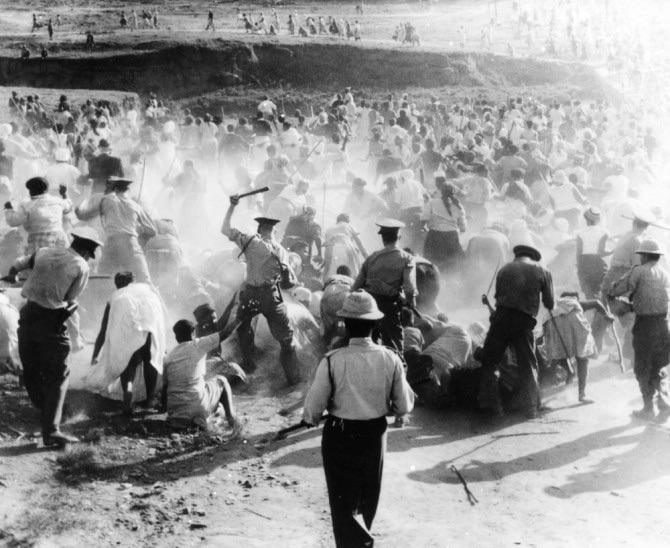
In the midst of apartheid, the Pan-Africanist Congress (PAC) broke from the African National Congress over the ANC’s multiracial approach to resisting segregation. The PAC took a more exclusively African nationalist stance and, in 1960, organized a campaign against the hated pass laws, which required Black South Africans to carry internal passports controlling where they could live and work.
The PAC urged supporters to deliberately leave their passes at home and present themselves at police stations to be arrested en masse, overwhelming the system through peaceful defiance.
On March 21, 1960, in Sharpeville, Transvaal, approximately 5,000 protesters gathered outside a police station intending to surrender themselves for arrest. At around 1:30 p.m., without warning, police opened fire on the unarmed crowd. Officers discharged 1,344 rounds, killing 69 people (later research suggests 91 were killed) and wounding many more, as protestors were shot in the back as they fled.
The government responded as authoritarian regimes often do, with repression and lies. A state of emergency was declared, and more than 18,000 people were detained without charge, including Nelson Mandela. Strikes, riots, and protests spread across the country, while international condemnation mounted.
Photographer Ian Berry was present that day. His images show people fleeing gunfire and bodies lying in the dust, forcing the world to begin to confront the brutality of apartheid.
If interested, I write more about the end of apartheid here:
by aid2000iscool