This episode is one of the most unique moments in history. The crisis began in 1621 when the Portuguese governor João Correia de Sousa decided to break the old alliance with the Kingdom of Kongo. He was confident of victory because he severely underestimated his opponent: the new monarch, Pedro II Nkanga a Mvika, was seen as a loser. His claim to the throne was so weak that his supporters had to invent a fictitious genealogy to legitimize him. Furthermore, the Jesuits described him as a pious, meek, and always smiling man. This led the Portuguese to believe that he would offer no real resistance.
Driven by greed, the governor fabricated diplomatic incidents to justify an illegal invasion. The campaign was one of calculated cruelty: it began with a betrayal in the Kasanze region, where he accepted the peaceful surrender of local leaders only to imprison thousands of them and send them to Brazil, cynically justifying it in the records as a “waste to kill good pieces [read slaves]”. Then, at the Battle of Mbumbi, his Imbangala mercenary allies not only massacred the Kongo nobility but also committed cannibalism, roasting and eating enemy corpses on the battlefield.
However, Pedro II “the smiling one” went beyond expectations. He not only mobilized the kingdom (with an army of an estimated 20,000 soldiers) to crush the Portuguese army at the decisive Battle of Mbanda Kasi, but also executed a great diplomatic maneuver: he wrote to the Dutch—enemies of Portugal during the Iberian Union—proposing a joint invasion of Angola, fully funded by Kongo with payments in gold, silver, and ivory.
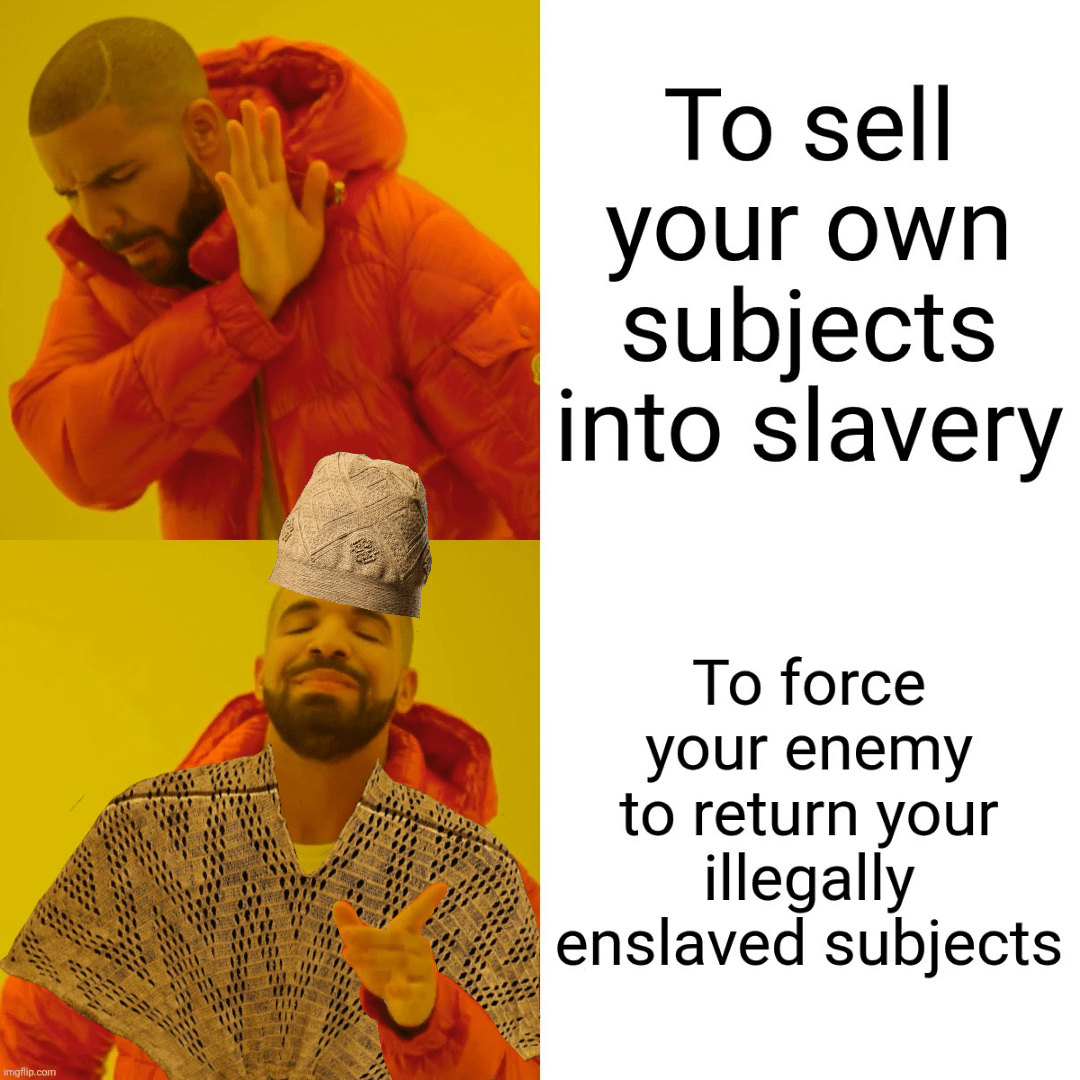
Panic ensued, and the colony of Angola collapsed. In Luanda, the Jesuits declared the war “unjust” and excommunicated the governor, while the Portuguese colonists themselves revolted upon seeing their businesses ruined (they lost more than 800,000 cruzados*) and merchants killed in the interior. Faced with military defeat, condemnation from the Church, and the Dutch threat, the Iberian Crown capitulated. The traitorous Correia de Sousa tried to flee but was captured and died in prison. To avoid the total annihilation of its presence in the region, Portugal was forced to yield to Pedro’s demand: in an unprecedented logistical operation that lasted several years, the Portuguese had to locate and bring back from Brazil the more than 1,000 subjects of Kongo, restoring their freedom in Africa.
*Impossible to estimate precisely, but it would be in the millions of dollars, according to Google.
Source: *A History of West Central Africa to 1850*, Chapter 4, p. 128
TheHistoryMaster2520 on
Well, usually your subjects aren’t the ones you’re selling into slavery, it’s the people outside your kingdom who you capture and raid.

2 Comments
**Context**
This episode is one of the most unique moments in history. The crisis began in 1621 when the Portuguese governor João Correia de Sousa decided to break the old alliance with the Kingdom of Kongo. He was confident of victory because he severely underestimated his opponent: the new monarch, Pedro II Nkanga a Mvika, was seen as a loser. His claim to the throne was so weak that his supporters had to invent a fictitious genealogy to legitimize him. Furthermore, the Jesuits described him as a pious, meek, and always smiling man. This led the Portuguese to believe that he would offer no real resistance.
Driven by greed, the governor fabricated diplomatic incidents to justify an illegal invasion. The campaign was one of calculated cruelty: it began with a betrayal in the Kasanze region, where he accepted the peaceful surrender of local leaders only to imprison thousands of them and send them to Brazil, cynically justifying it in the records as a “waste to kill good pieces [read slaves]”. Then, at the Battle of Mbumbi, his Imbangala mercenary allies not only massacred the Kongo nobility but also committed cannibalism, roasting and eating enemy corpses on the battlefield.
However, Pedro II “the smiling one” went beyond expectations. He not only mobilized the kingdom (with an army of an estimated 20,000 soldiers) to crush the Portuguese army at the decisive Battle of Mbanda Kasi, but also executed a great diplomatic maneuver: he wrote to the Dutch—enemies of Portugal during the Iberian Union—proposing a joint invasion of Angola, fully funded by Kongo with payments in gold, silver, and ivory.
Panic ensued, and the colony of Angola collapsed. In Luanda, the Jesuits declared the war “unjust” and excommunicated the governor, while the Portuguese colonists themselves revolted upon seeing their businesses ruined (they lost more than 800,000 cruzados*) and merchants killed in the interior. Faced with military defeat, condemnation from the Church, and the Dutch threat, the Iberian Crown capitulated. The traitorous Correia de Sousa tried to flee but was captured and died in prison. To avoid the total annihilation of its presence in the region, Portugal was forced to yield to Pedro’s demand: in an unprecedented logistical operation that lasted several years, the Portuguese had to locate and bring back from Brazil the more than 1,000 subjects of Kongo, restoring their freedom in Africa.
*Impossible to estimate precisely, but it would be in the millions of dollars, according to Google.
Source: *A History of West Central Africa to 1850*, Chapter 4, p. 128
Well, usually your subjects aren’t the ones you’re selling into slavery, it’s the people outside your kingdom who you capture and raid.