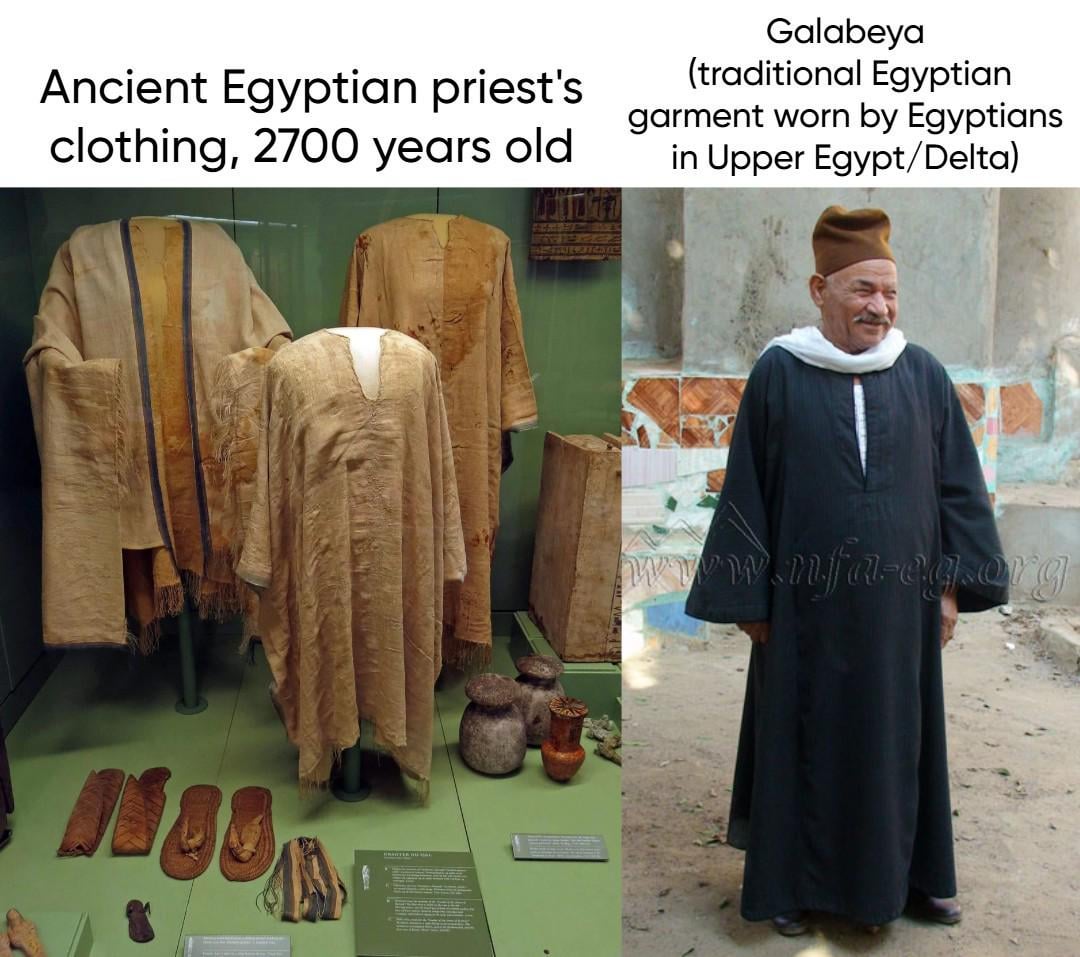
The photo is from the National Museum of Denmark; similar clothing can be found in the Turin Museum in Italy.
For your information, the Egyptian galabiya is unique; no one else in the Middle East or Africa wears anything like it. The Arab thobe is completely different from the galabiya, and Sudanese clothing is also different. The Egyptian galabiya is characterized by a long, wide neckline and wide sleeves and shoulders. You’ll find it wider in Upper Egypt, while it’s slightly narrower in the Delta. Older people tend to wear it with very wide sleeves, while the younger generation wears it with moderately wide sleeves.
The word galabiya comes from the Coptic word “kolobi,” which means garment.
The galabeya isn’t just for special occasions; it’s everyday wear for millions of Egyptians, whether at school, work, or for other events. You’ll find many Egyptians wearing it in Cairo as well, because Cairo and other urban centers in Egypt are originally populated by people from Upper Egypt and delta who migrated decades ago for work and settled in the cities for generations.
Scutwork on
Weirdly always described as flapping in books. So many jalabiyas flapping as people move around.

3 Comments
The photo is from the National Museum of Denmark; similar clothing can be found in the Turin Museum in Italy.
For your information, the Egyptian galabiya is unique; no one else in the Middle East or Africa wears anything like it. The Arab thobe is completely different from the galabiya, and Sudanese clothing is also different. The Egyptian galabiya is characterized by a long, wide neckline and wide sleeves and shoulders. You’ll find it wider in Upper Egypt, while it’s slightly narrower in the Delta. Older people tend to wear it with very wide sleeves, while the younger generation wears it with moderately wide sleeves.
The word galabiya comes from the Coptic word “kolobi,” which means garment.
The galabeya isn’t just for special occasions; it’s everyday wear for millions of Egyptians, whether at school, work, or for other events. You’ll find many Egyptians wearing it in Cairo as well, because Cairo and other urban centers in Egypt are originally populated by people from Upper Egypt and delta who migrated decades ago for work and settled in the cities for generations.
Weirdly always described as flapping in books. So many jalabiyas flapping as people move around.
But the Delta region is Lower Egypt…