Edit: Yes, it’s arrêt in Quebec. The OP’s point isn’t that it isn’t written the right way across Quebec/Canada, but that it isn’t written in French. “Stop” is French. It’s used as a word in everyday French.
ThisIsPaulDaily on
French speaking people are smart enough to understand what a red octagonal sign means.
QuentinUK on
Even in France the STOP signs aren’t in French.
[deleted] on
[deleted]
gorginhanson on
Their language has both candy canes and candy cane with a dot in it.

mcgillthrowaway22 on
Actually this legally counts as French + Inuktitut, not English. The OQLF considers both “Arrêt” and “Stop” to be acceptable french-language signage; though there’s no obvious preference for the former, the latter can be found in some areas (such as in Westmount, an enclave of Montréal). The only rule is that a sign cannot display *both* words: from my experience, the only stop signs in Québec that have both “Arrêt” and “Stop” on them are those in areas administered by the federal government (like at the airport).
Djcubic on
Such a non issue, Quebec is stolen land
Parasetamol-500mg on
Fk french.
Wraithei on
You should see Welsh road signs, every single one is in both English and Welsh.
And many Welsh people don’t speak Welsh anymore 😂
Sometimes I like to imagine that the Welsh is actually secret messages taking the piss out of England and not actually a translation 😂😂
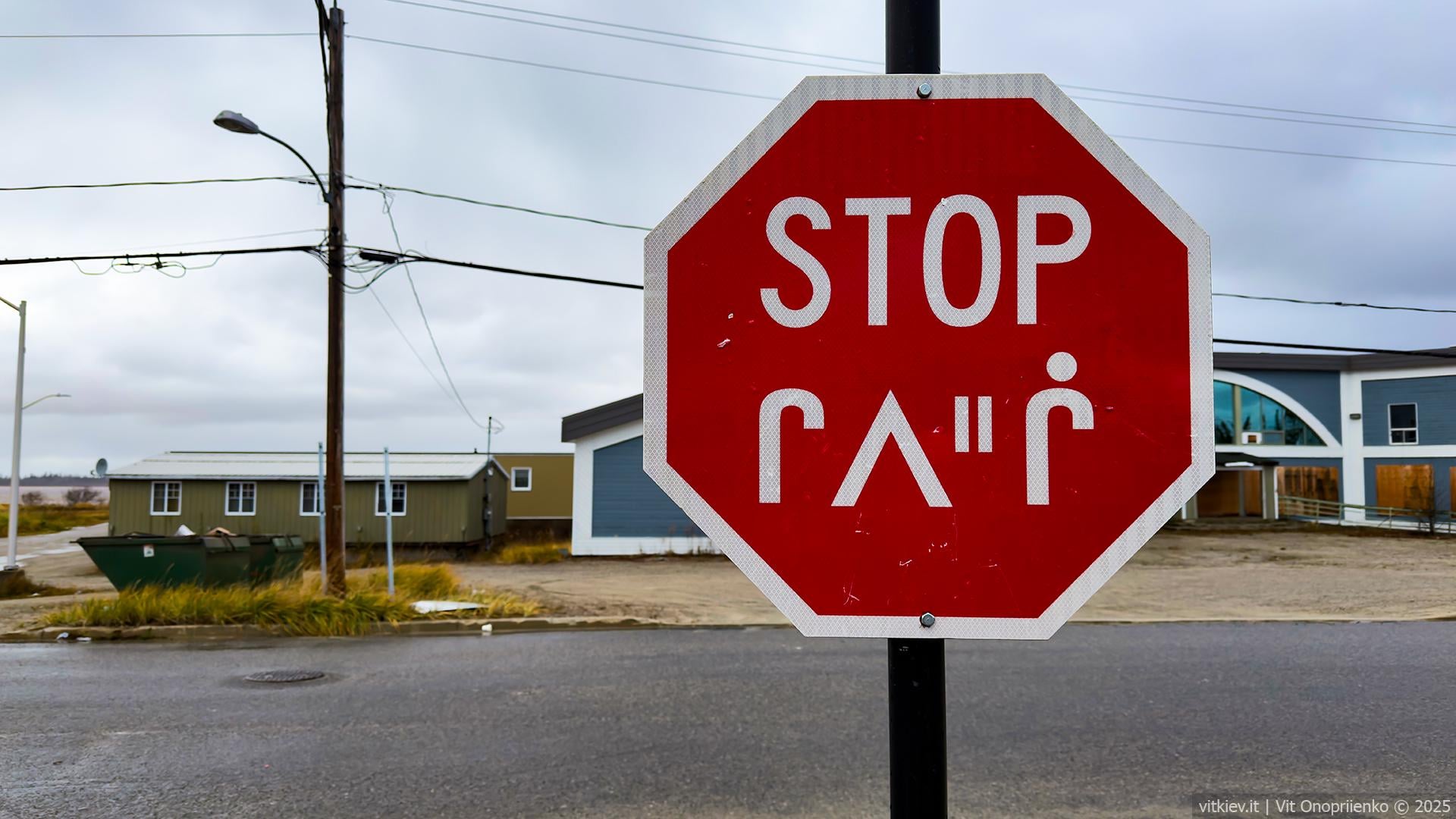
Inuktitut syllabics are borrowed from Cree Language, it is important that Inuit and Cree along with their languages are distinct, James Bay and Northern Quebec are indeed in one Land Claims Agreement but both are unique to their own. The stop sign is in Cree from Eastmain Cree community in Quebec, not Inuktitut.
_Hasenpfeffer on
What’s the second language?
Do_You_Pineapple_Bro on
Oh I see
Candy Cane, Tent, Two far away people, Candy Cane with a Head
DJMagicHandz on
It’s the least they could after they tried to exterminate the First Nation folks.
Hentai_For_Life on
I would think the shape and color would get the point across regardless of language.
Lieste on
French STOP signs in France say STOP.
9999AWC on
1. That’s Cree
2. Stop is a word in French
Over_Variation8700 on
What’s crazy is the stop signs read Arrêt or both Arrêt and Stop in Quebec but in France it’s all Stop
clintCamp on
In Spain they always have stop in English rather than use a spanish equivalent.
ManWhoSoldTheWorld01 on
Maybe there is a special exemption, or just lack of interest in enforcement but in Quebec “Stop” alone is acceptable or “Arrêt” alone.
It’s illegal to have “Stop” and “Arrêt” on the same sign, regardless of order, because it implies translation, regardless of the actual demographics of the area.
Although in English areas you will often see “Stop” signs, which as I said, are acceptable.
You also see these kinds of bilingual signs in other reserves throughout Canada.
Hairy_Photograph1384 on
Quebec is the only place that really sues French stop signs
tigeryorkie07 on
😡
essaysmith on
And in France, they are in English.
rhesusMonkeyBoy on
Arrete
The-IT_MD on
Strange way to spell “hammer time” 🤷
Oberndorferin on
That must be a political decision. Who on the world wouldn’t understand the octagonal stop sign? It’s everywhere “stop”, in almost all nations.
skrillex_sk2 on
I’m sure french Canadians understand what stop means.
AvatarIII on
Stop signs in France sometimes just say Stop.
annnnn5 on
Quebec nationalists in shambles.
Tryingsoveryhard on
That’s on a reserve. It’s not technically in Quebec.
ivorybloodsh3d on
Good. Fuck the Quebecois
Short_Cranberry7562 on
I worked on a remote project south east of James bay, and the indigenous people on the project all spoke English, barely French. My coworker told me it’s a legacy of missionaries in remote communities deliberately attempting to prevent indigenous integration by teaching English in QC and French in ON communities.
I don’t know how much of that is BS, but it rings anecdotally true with my experiences in northern Ontario and other northern communities.

41 Comments
[deleted]
[deleted]
This photo is from Eastmain, QC
The Quebec language police have been trying to stop them. But they keep getting lost in the wilderness getting there. Lol.
Translation for the bit underneath: Collaborate and Listen
That’s Cree, not Inuktitut. Which makes sense if the photo was taken in Eastmain: Eastmain is a Cree village on James Bay.
cry me a rivière
In France the stop sign says STOP on it. So technically it is French and also a shit load of other countries. This post explains it better: https://www.reddit.com/r/geoguessr/s/qISyJXm1QM
Edit: Yes, it’s arrêt in Quebec. The OP’s point isn’t that it isn’t written the right way across Quebec/Canada, but that it isn’t written in French. “Stop” is French. It’s used as a word in everyday French.
French speaking people are smart enough to understand what a red octagonal sign means.
Even in France the STOP signs aren’t in French.
[deleted]
Their language has both candy canes and candy cane with a dot in it.

Actually this legally counts as French + Inuktitut, not English. The OQLF considers both “Arrêt” and “Stop” to be acceptable french-language signage; though there’s no obvious preference for the former, the latter can be found in some areas (such as in Westmount, an enclave of Montréal). The only rule is that a sign cannot display *both* words: from my experience, the only stop signs in Québec that have both “Arrêt” and “Stop” on them are those in areas administered by the federal government (like at the airport).
Such a non issue, Quebec is stolen land
Fk french.
You should see Welsh road signs, every single one is in both English and Welsh.
And many Welsh people don’t speak Welsh anymore 😂
Sometimes I like to imagine that the Welsh is actually secret messages taking the piss out of England and not actually a translation 😂😂
[Iqaluit stop sign with Inuktitut](https://upload.wikimedia.org/wikipedia/commons/thumb/6/6a/IqaluitStop.jpg/960px-IqaluitStop.jpg)
I spent some time working around radisson a few years back, my limited experience was that the Cree people I met really weren’t big fans of French.
Syllabic is used by many indigenous languages.
Here is one in Inuktitut
[This is a stop sign in Iqaluit. : r/canada](https://www.reddit.com/r/canada/comments/kb0sw/this_is_a_stop_sign_in_iqaluit/)
Inuktitut syllabics are borrowed from Cree Language, it is important that Inuit and Cree along with their languages are distinct, James Bay and Northern Quebec are indeed in one Land Claims Agreement but both are unique to their own. The stop sign is in Cree from Eastmain Cree community in Quebec, not Inuktitut.
What’s the second language?
Oh I see
Candy Cane, Tent, Two far away people, Candy Cane with a Head
It’s the least they could after they tried to exterminate the First Nation folks.
I would think the shape and color would get the point across regardless of language.
French STOP signs in France say STOP.
1. That’s Cree
2. Stop is a word in French
What’s crazy is the stop signs read Arrêt or both Arrêt and Stop in Quebec but in France it’s all Stop
In Spain they always have stop in English rather than use a spanish equivalent.
Maybe there is a special exemption, or just lack of interest in enforcement but in Quebec “Stop” alone is acceptable or “Arrêt” alone.
It’s illegal to have “Stop” and “Arrêt” on the same sign, regardless of order, because it implies translation, regardless of the actual demographics of the area.
Although in English areas you will often see “Stop” signs, which as I said, are acceptable.
You also see these kinds of bilingual signs in other reserves throughout Canada.
Quebec is the only place that really sues French stop signs
😡
And in France, they are in English.
Arrete
Strange way to spell “hammer time” 🤷
That must be a political decision. Who on the world wouldn’t understand the octagonal stop sign? It’s everywhere “stop”, in almost all nations.
I’m sure french Canadians understand what stop means.
Stop signs in France sometimes just say Stop.
Quebec nationalists in shambles.
That’s on a reserve. It’s not technically in Quebec.
Good. Fuck the Quebecois
I worked on a remote project south east of James bay, and the indigenous people on the project all spoke English, barely French. My coworker told me it’s a legacy of missionaries in remote communities deliberately attempting to prevent indigenous integration by teaching English in QC and French in ON communities.
I don’t know how much of that is BS, but it rings anecdotally true with my experiences in northern Ontario and other northern communities.