
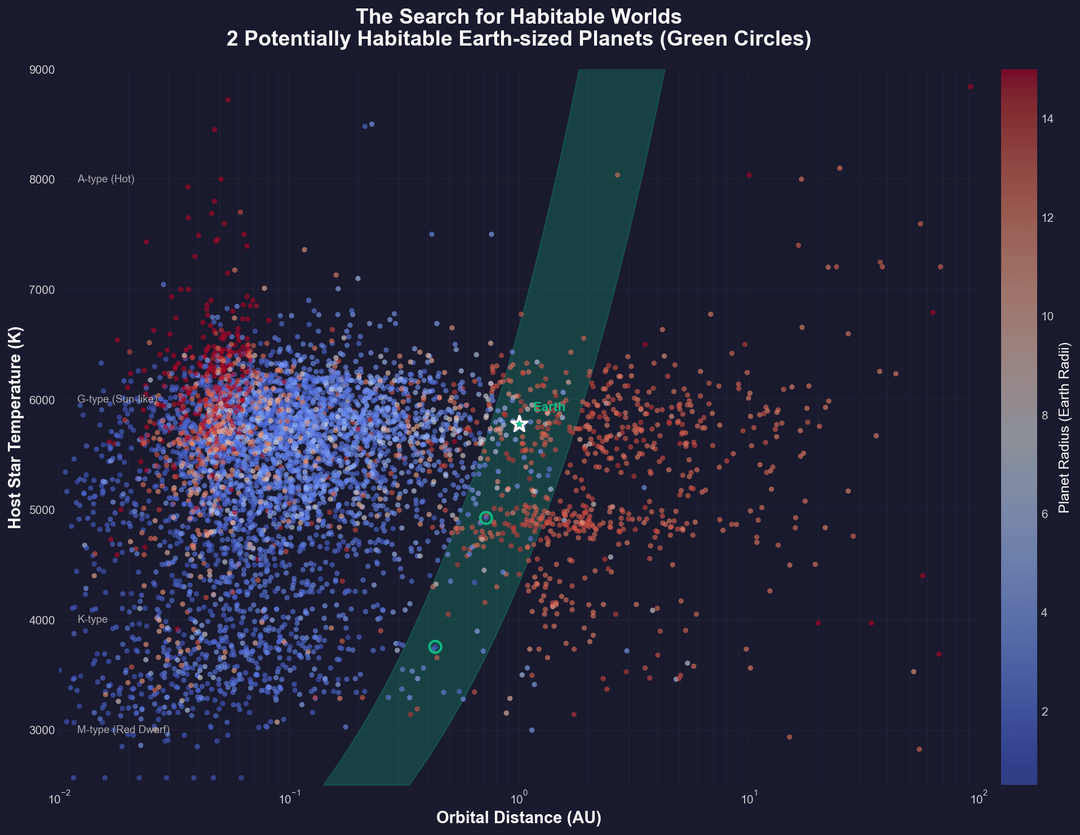
Data credit: https://exoplanetarchive.ipac.caltech.edu/cgi-bin/TblView/nph-tblView?app=ExoTbls&config=PSCompPars
Lots of interesting findings:
The Big Picture
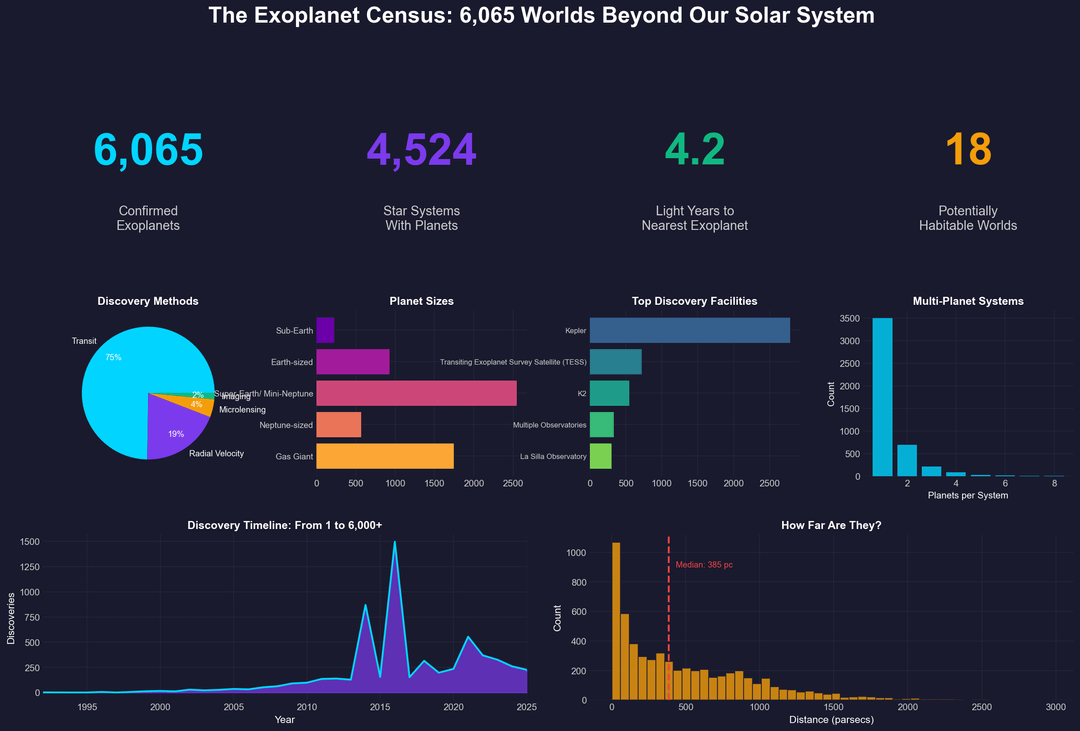
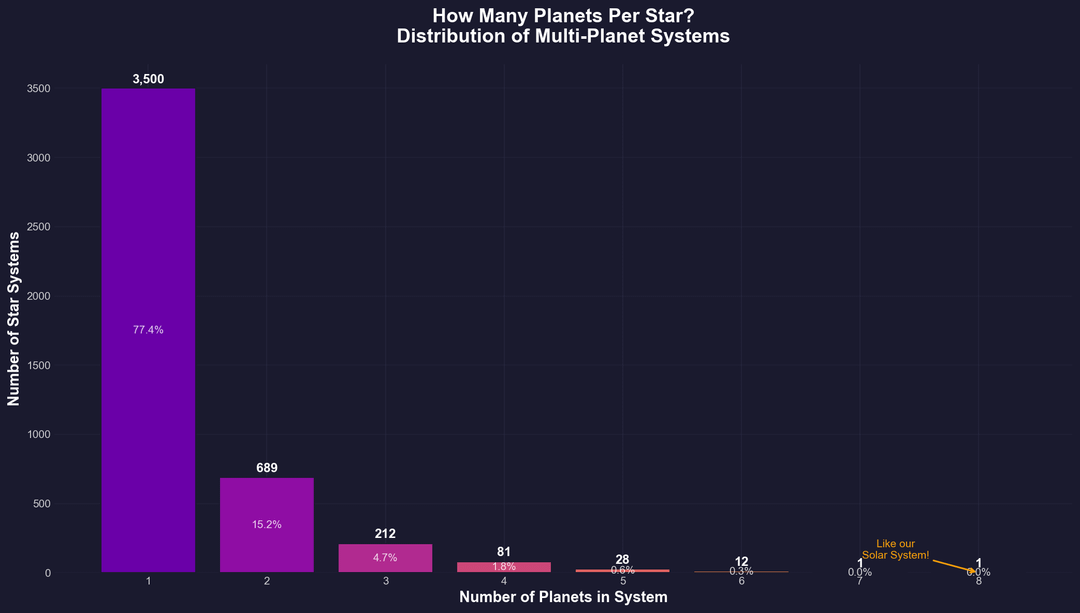
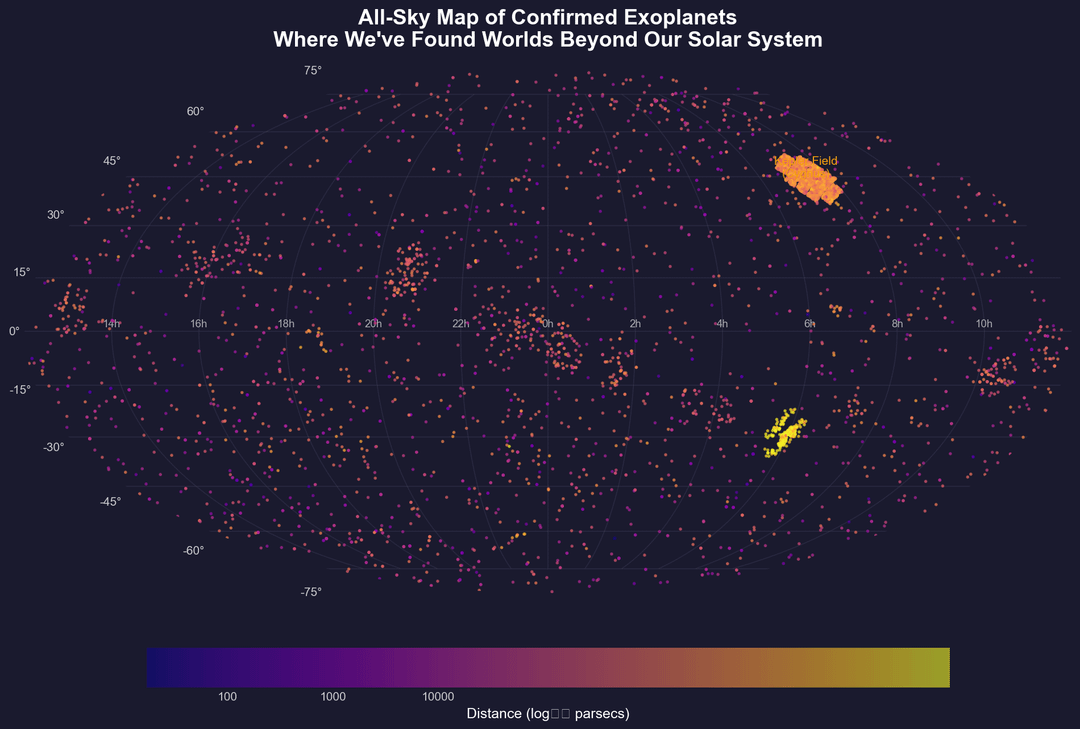
– 6,065 confirmed exoplanets across 4,524 star systems – we've barely scratched the surface of our galaxy's ~200 billion stars
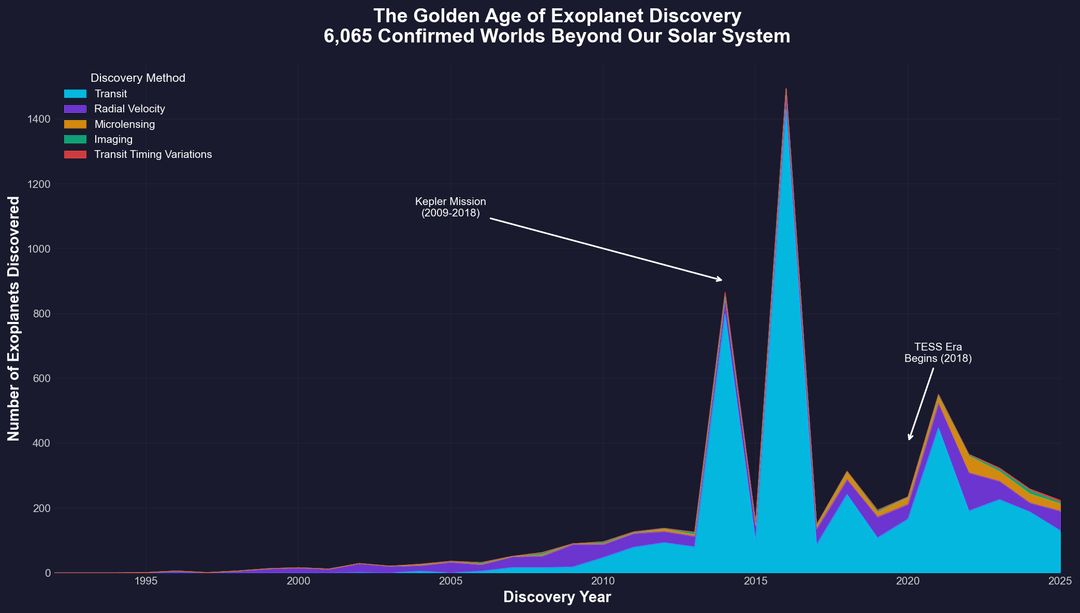
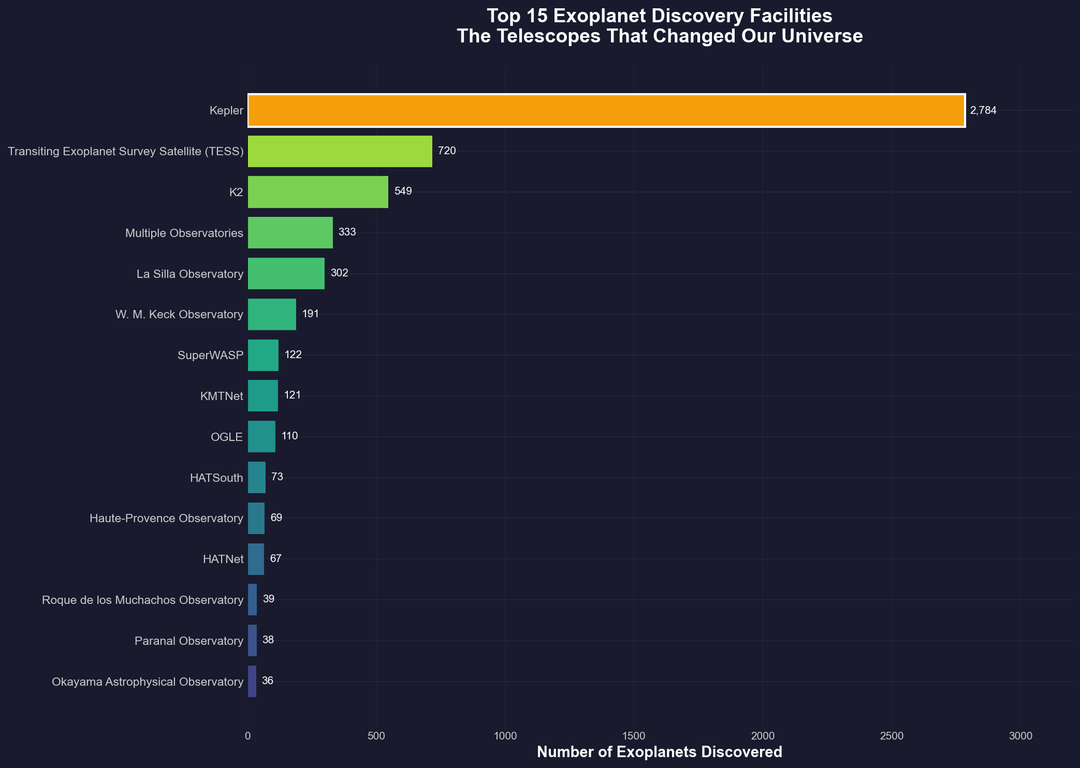
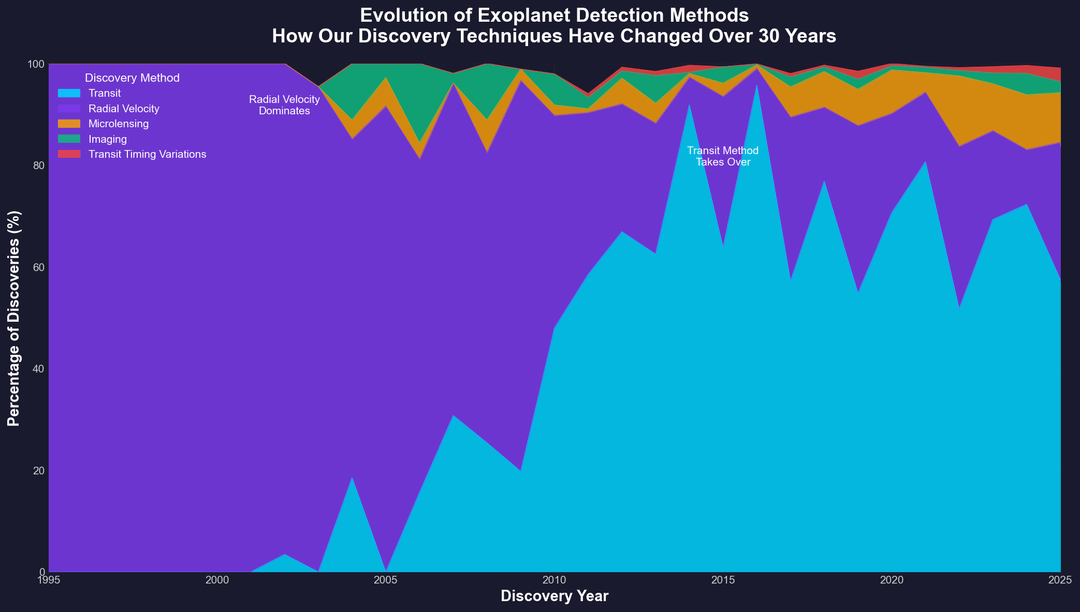
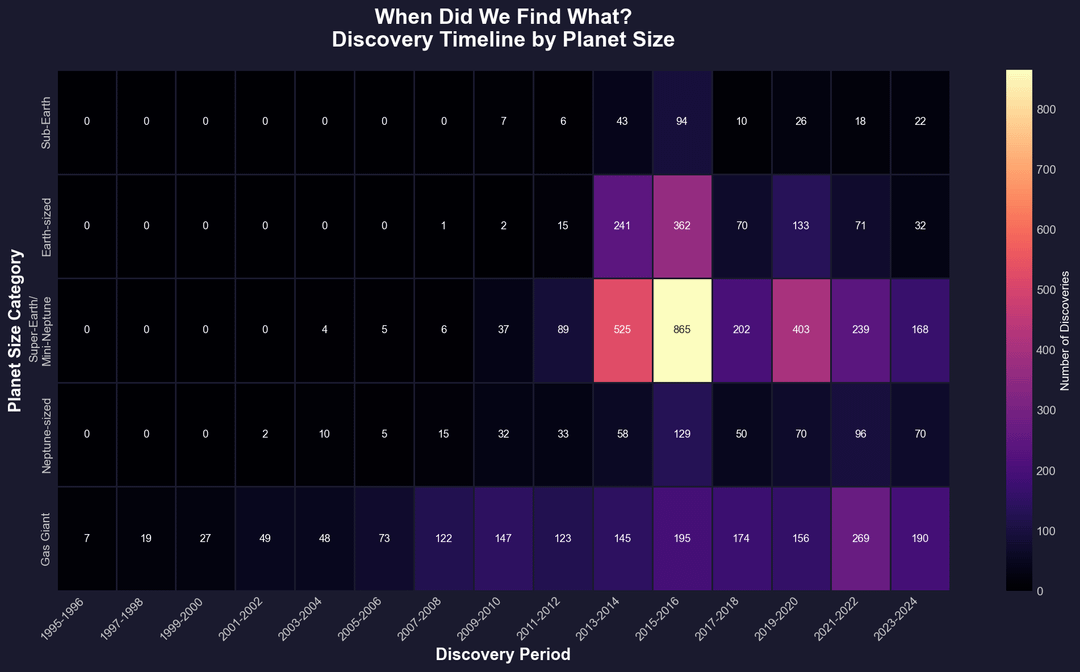
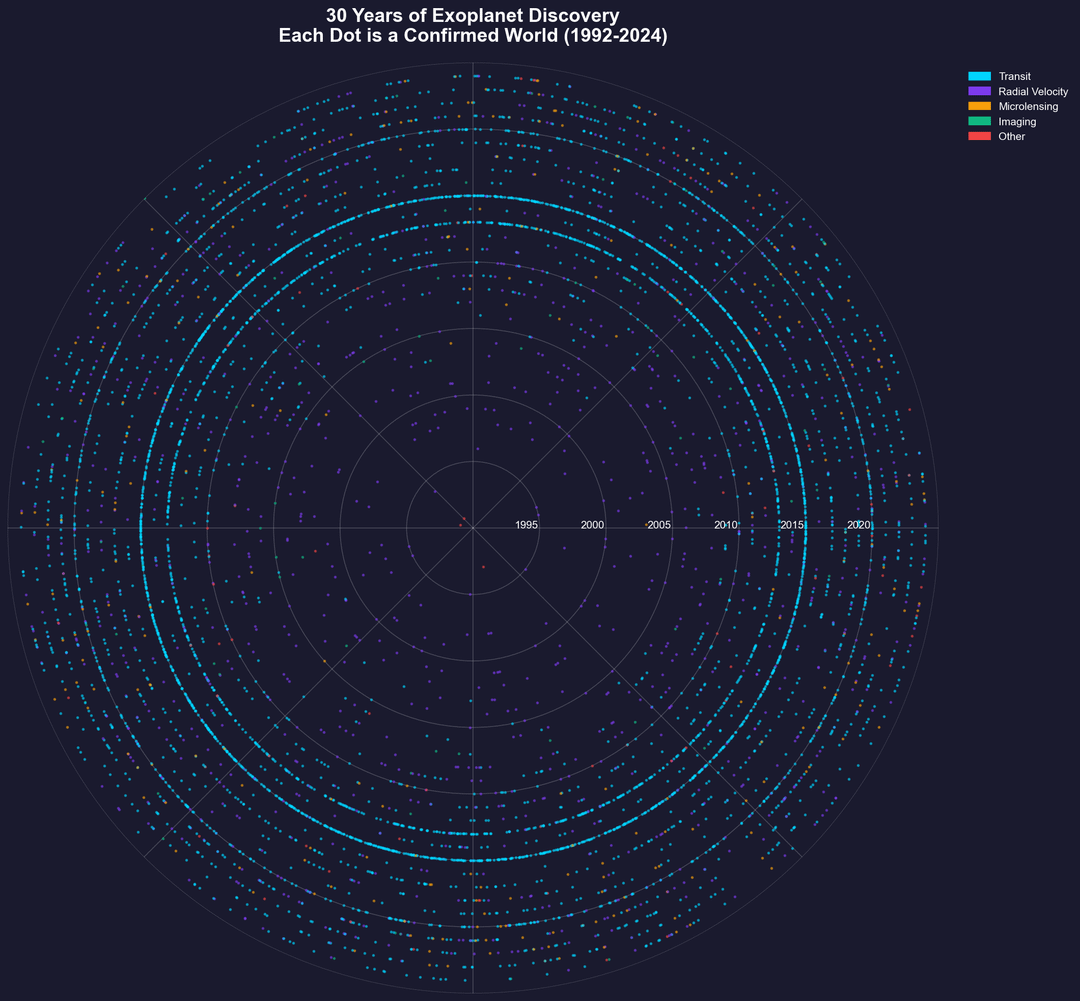
– 2016 was the golden year with 1,496 discoveries in a single year, thanks to the Kepler mission's data processing
– Transit method dominates (73.8%) – watching stars dim as planets pass in front is our best planet-finding technique
Planet Diversity
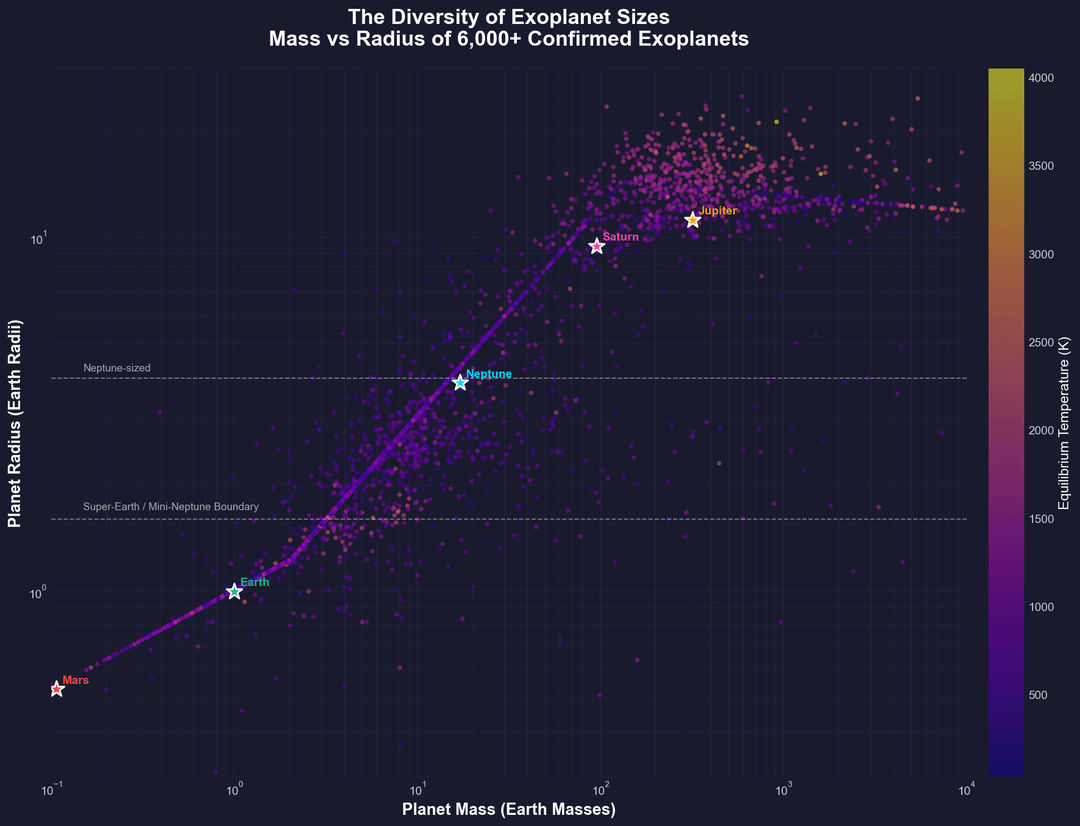
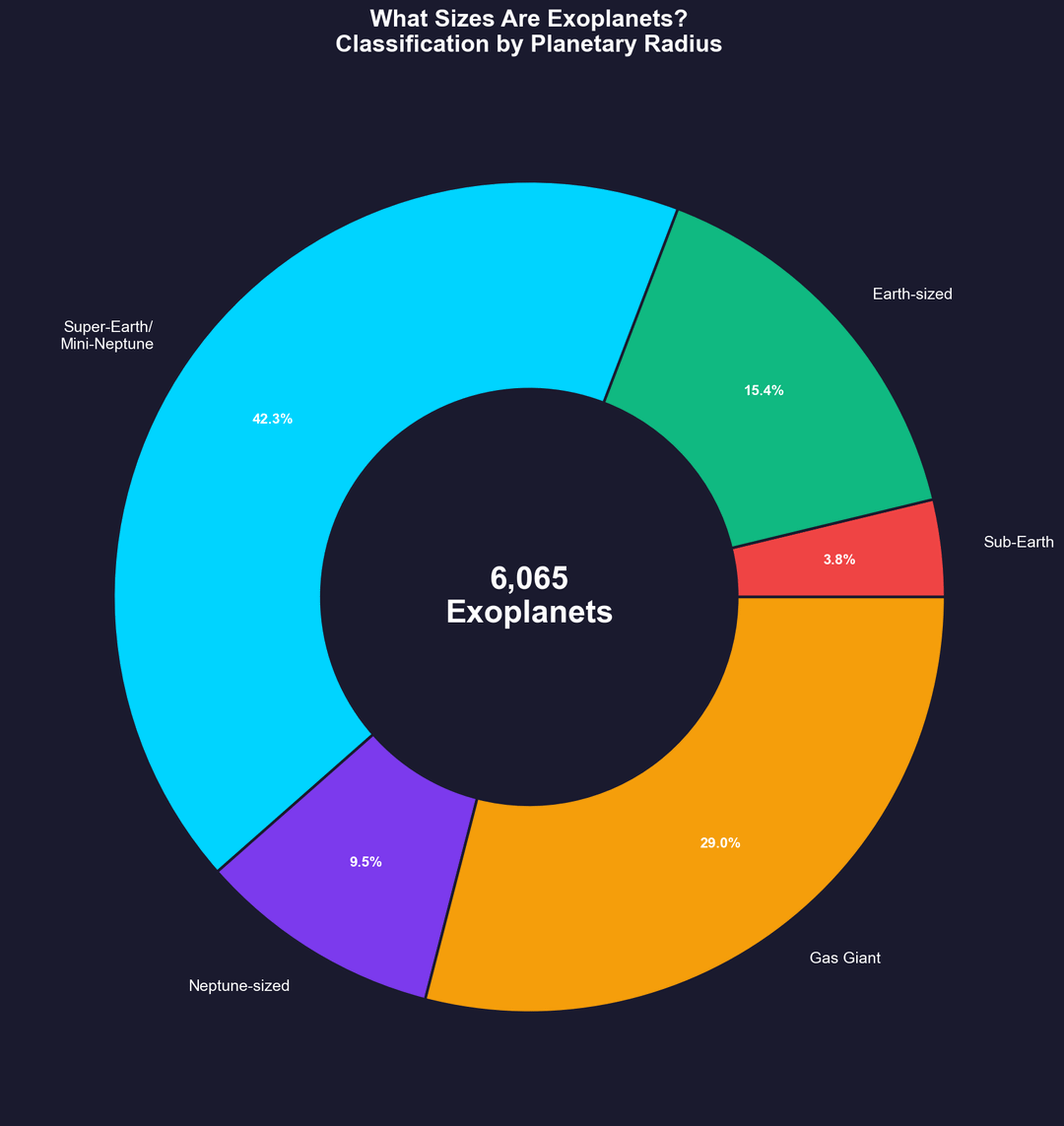
– Super-Earths/Mini-Neptunes are most common (42%) – a planet type that doesn't exist in our Solar System.
– Only 3.7% are smaller than Earth – small planets are hard to detect, so there are likely many more
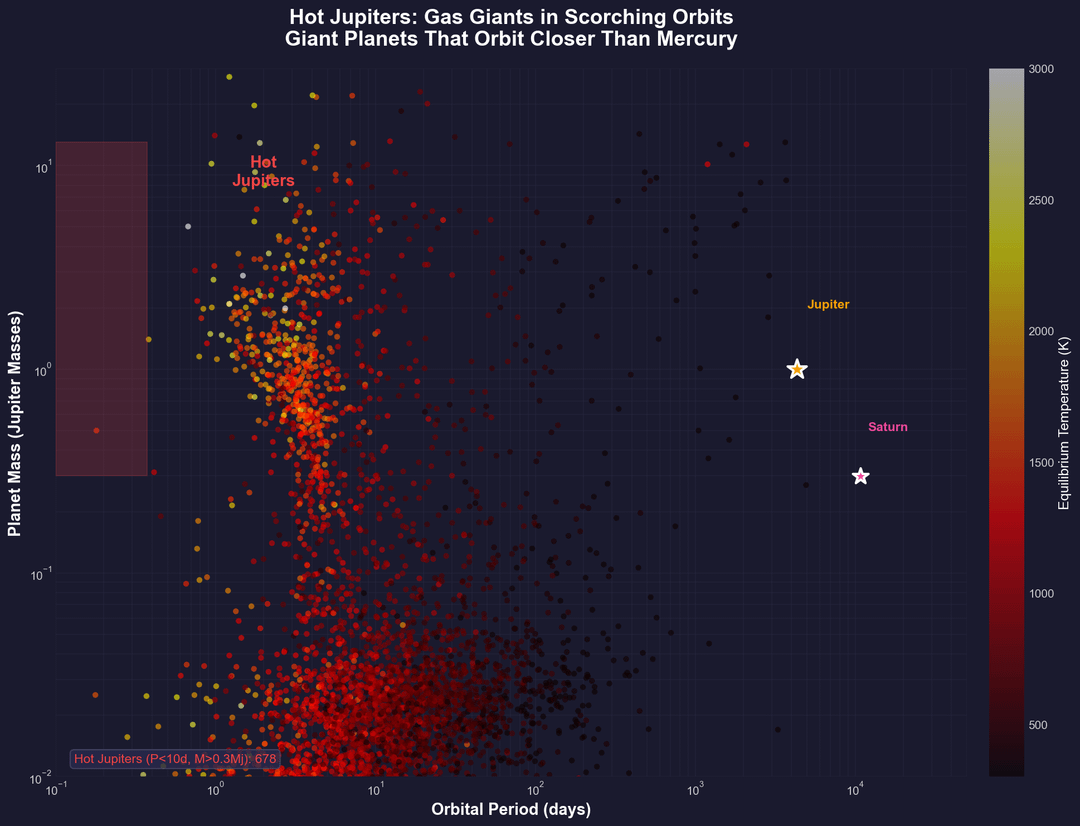
– 678 "Hot Jupiters" – gas giants orbiting closer than Mercury, some completing a year in just hours!
Extreme Worlds
– Shortest orbit: 0.09 days (2.2 hours!)
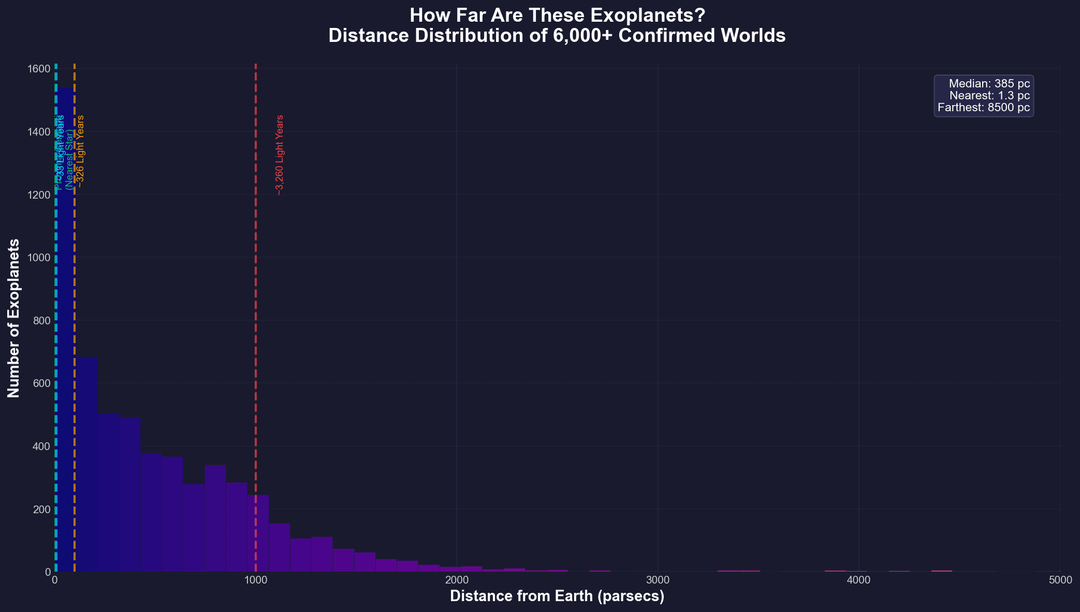
– Longest orbit: 1.1 million years – this planet has orbited its star perhaps 4,000 times since the dinosaurs
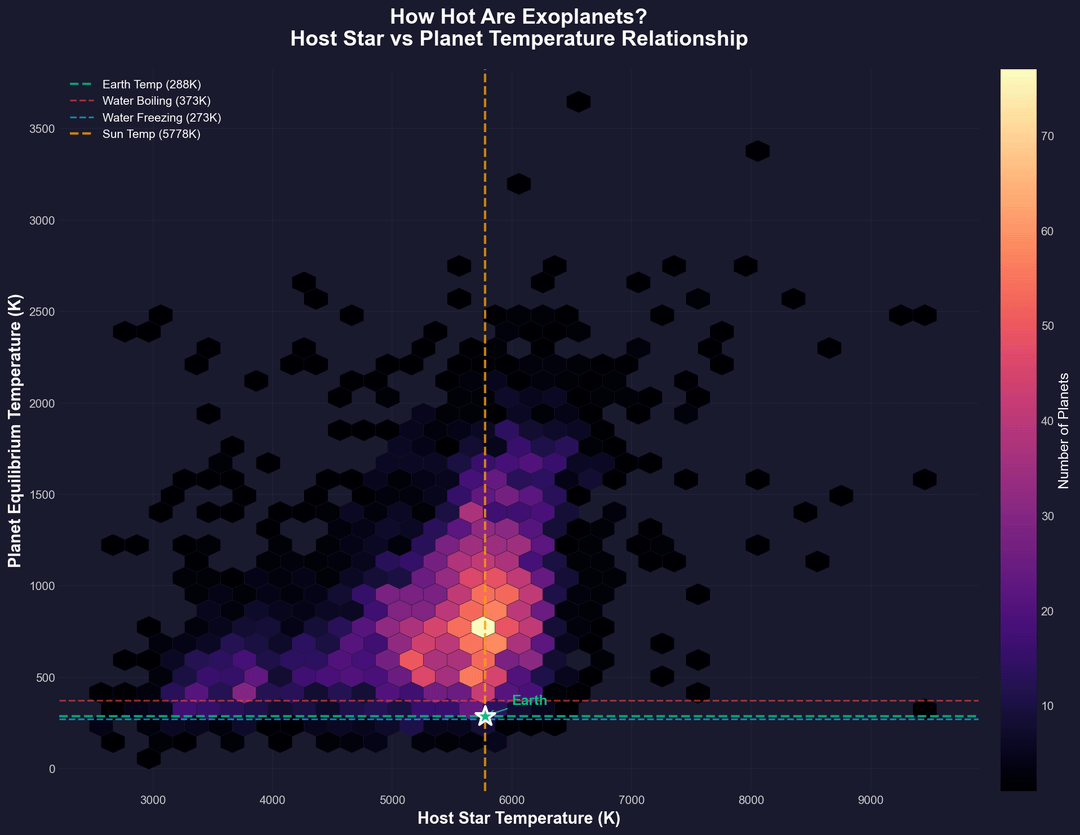
– Hottest planet: KELT-9 b at 4,050K – hotter than most stars!
– Lightest: 0.02 Earth masses (smaller than our Moon), Heaviest: 30 Jupiter masses
And more.
Link to full analysis+charts: https://app.verbagpt.com/shared/NGGydFmn6vAnSnnXYV8asrJ494RGVepZ
by VerbaGPT
3 Comments
> small planets are hard to detect, so there are likely many more
With Solar System asteroids happens a similar story. The distribution by size is skewed due to this effect.
there was such a tremendous spike in 2014 – 2018. i remember hearing a lot of space news about “potentially habitable” planets back then, no wonder considering the data from the graph.
*The Fermi Paradox enters the chat*