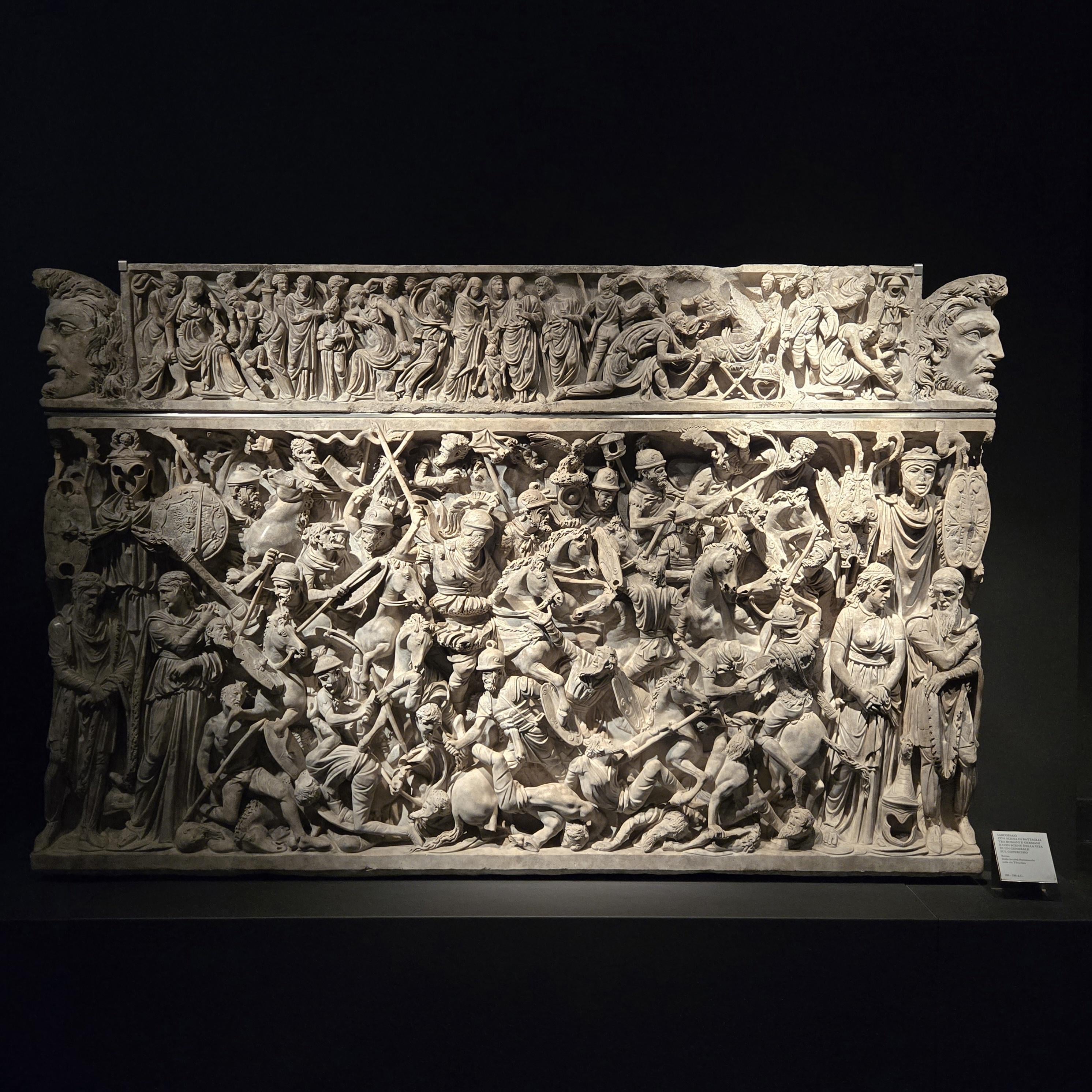
This is the Portonaccio Sarcophagus, discovered in 1931 near Via Tiburtina in Rome and dated to around 180 AD, during the reign of Marcus Aurelius.
The front shows a symbolic battle carved in extraordinarily deep relief: Roman cavalry and infantry overwhelm barbarian enemies. The horseman in the central part embodies Roman military dominance.
The enslaved barbarians framing the scene emphasize the cost of resisting Rome, while the sides depict the aftermath: prisoners being marched across a pontoon bridge and enemy leaders submitting to Roman officials.
The lid celebrates the deceased and his wife, showing both domestic virtue and military clementia. The faces were left unfinished to be carved later with the likenesses of the dead.
Based on legion insignia, the sarcophagus may have belonged to Aulus Iulius Pompilius, a cavalry commander during Rome’s wars against Germanic tribes (172–175 AD).
This piece is currently housed at the Museo Nazionale Romano, Palazzo Massimo alle Terme, Rome.

1 Comment
This is the Portonaccio Sarcophagus, discovered in 1931 near Via Tiburtina in Rome and dated to around 180 AD, during the reign of Marcus Aurelius.
The front shows a symbolic battle carved in extraordinarily deep relief: Roman cavalry and infantry overwhelm barbarian enemies. The horseman in the central part embodies Roman military dominance.
The enslaved barbarians framing the scene emphasize the cost of resisting Rome, while the sides depict the aftermath: prisoners being marched across a pontoon bridge and enemy leaders submitting to Roman officials.
The lid celebrates the deceased and his wife, showing both domestic virtue and military clementia. The faces were left unfinished to be carved later with the likenesses of the dead.
Based on legion insignia, the sarcophagus may have belonged to Aulus Iulius Pompilius, a cavalry commander during Rome’s wars against Germanic tribes (172–175 AD).
This piece is currently housed at the Museo Nazionale Romano, Palazzo Massimo alle Terme, Rome.