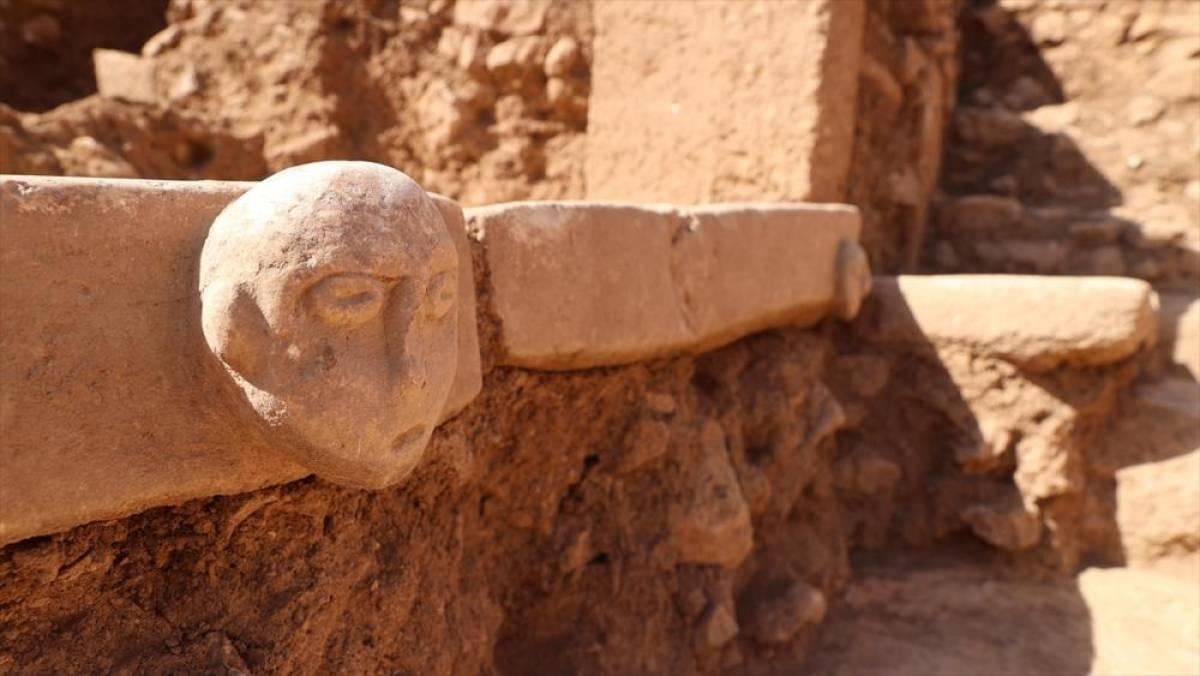
Archaeologists in southeastern Turkey have uncovered two 10,000-year-old human face reliefs, offering new insights into artistic expression during the Neolithic period. [1200×676]
Archaeologists in southeastern Turkey have uncovered two 10,000-year-old human face reliefs, offering new insights into artistic expression during the Neolithic period. [1200×676]
The reliefs were carved onto the front surfaces of four limestone blocks forming a platform that likely had a ceremonial function. Both faces are oriented toward the north and have stylistic features.
I have never been so stunned by relics as I have been when I was in Istanbul. There is so much historical artifacts in that city there isn’t really any way to hide them. I was walking down a street in sultanhamet and there, beside a street trash bin, was pieces of a marble column.
On the ground surrounding the Hagia Sophia was basically a grave yard of these marble columns in all different states. I took a bunch of pictures there because there was a bunch of cats lounging around on these relics like some kind of wicked cool ancient Roman cat tree.
SentientNebulous on
Whoa!! these remind me of the tenon heads at Chavin De Huantar
SentientNebulous on
Whoa!! these remind me of the tenon heads at Chavin De Huantar
foremastjack on
He looks vaguely annoyed.
mayito35 on
Sooo….an alien right?
BroomClosetJoe on
do we have older examples of human facial features carved/painted? I know that older paleolithic/mezolithic art is more or less devoid of any facial features on otherwise detailed human figures (EX: Venus of Willendorf).
podcastofallpodcasts on
Looks like the ones in south america
lastdarknight on
Korvo?
06Cetin on
Türkiye not Turkey
heiro5 on
The eyes look like reproductions of the cowry shells used as eyes in skulls. They may be representing plastered skulls rather than living faces

11 Comments
The reliefs were carved onto the front surfaces of four limestone blocks forming a platform that likely had a ceremonial function. Both faces are oriented toward the north and have stylistic features.
More info:
[https://arkeonews.net/an-8500-year-old-micro-carved-bead-and-a-10000-year-old-skull-room-reveal-sefertepes-hidden-symbolic-world/](https://arkeonews.net/an-8500-year-old-micro-carved-bead-and-a-10000-year-old-skull-room-reveal-sefertepes-hidden-symbolic-world/)
[https://www.heritagedaily.com/2025/11/10000-year-old-human-face-reliefs-found-at-sefertepe/156507](https://www.heritagedaily.com/2025/11/10000-year-old-human-face-reliefs-found-at-sefertepe/156507)
I have never been so stunned by relics as I have been when I was in Istanbul. There is so much historical artifacts in that city there isn’t really any way to hide them. I was walking down a street in sultanhamet and there, beside a street trash bin, was pieces of a marble column.
On the ground surrounding the Hagia Sophia was basically a grave yard of these marble columns in all different states. I took a bunch of pictures there because there was a bunch of cats lounging around on these relics like some kind of wicked cool ancient Roman cat tree.
Whoa!! these remind me of the tenon heads at Chavin De Huantar
Whoa!! these remind me of the tenon heads at Chavin De Huantar
He looks vaguely annoyed.
Sooo….an alien right?
do we have older examples of human facial features carved/painted? I know that older paleolithic/mezolithic art is more or less devoid of any facial features on otherwise detailed human figures (EX: Venus of Willendorf).
Looks like the ones in south america
Korvo?
Türkiye not Turkey
The eyes look like reproductions of the cowry shells used as eyes in skulls. They may be representing plastered skulls rather than living faces