Joseon dynasty (1392-1910), about mid-18th century
Porcelain painted with underglaze cobalt blue
Asia Society, New York: Mr. and Mrs. John D. Rockefeller 3rd Collection, 1979.196
PROVENANCE: Bequest of John D. Rockefeller 3rd in 1979; purchased from N.V. Hammer, New York in 1964.
White wares were popular during the Joseon dynasty, reflecting values of purity and minimalistic restraint associated with the official state ideology of Neo-Confucianism; frugality, modesty, pursuit of knowledge, filial piety, and proper behavior formed the basis for the social and political systems. Although this jar was most likely made at the court-patronized kilns near the capital (modern Seoul), it may have been created for the wealthy class of scholar-officials, as blue-and- white porcelain was by this time popular among elite consumers.
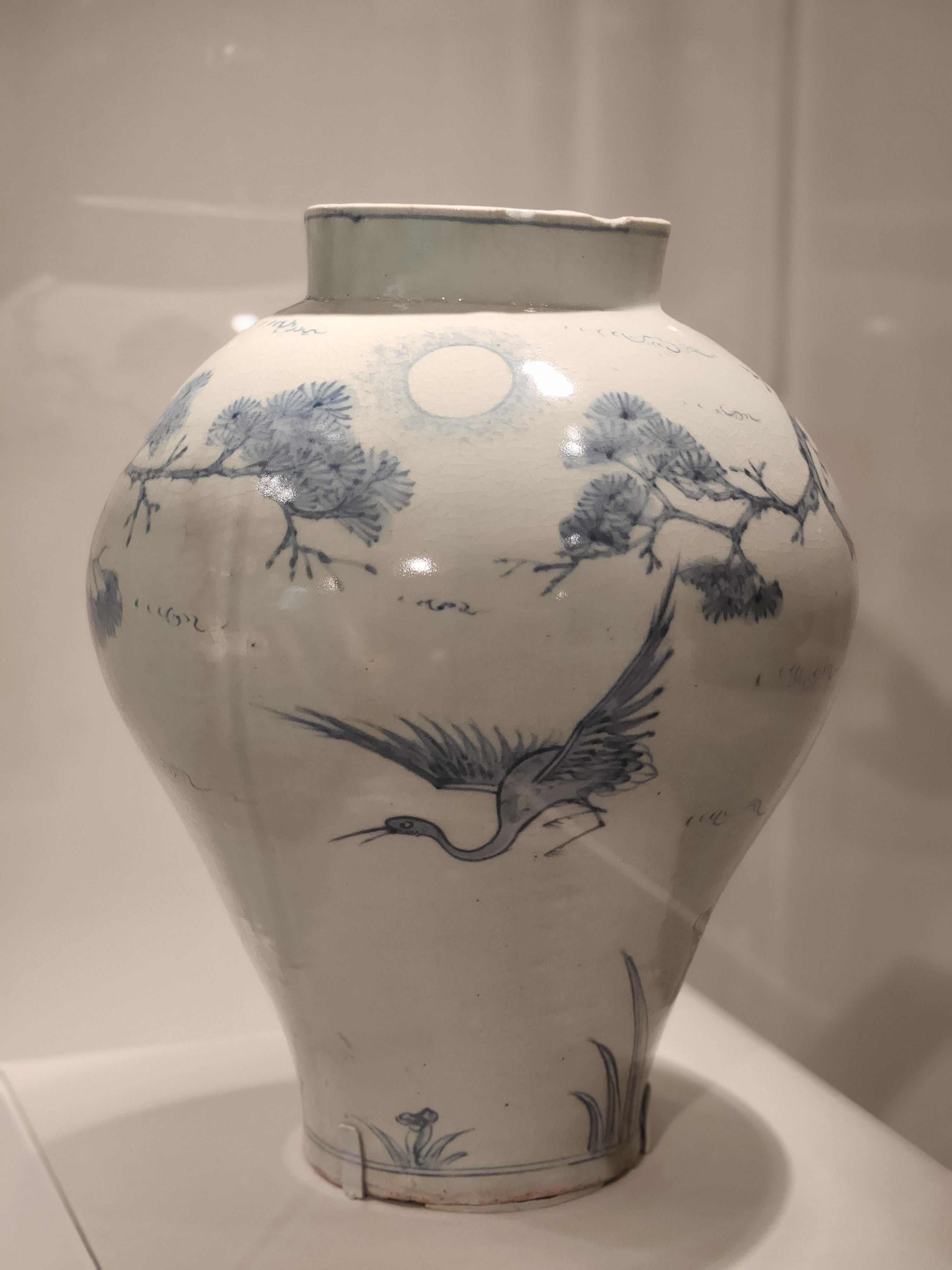
The dynamic design playfully painted on the jar includes motifs symbolizing longevity. Cranes, which mate for life, represent harmony and wishes for a long marriage, values in tandem with Confucian filial piety. Pine trees stand for resilience, endurance, and strength during adversity. The moon and sun are associated with the complementary yet opposing forces of yin and yang, the moon representing the yin or female principle.]

1 Comment
[display description](https://i.ibb.co/r2K7yrqC/20241004-133320.jpg)
[Storage Jar
Korea
Joseon dynasty (1392-1910), about mid-18th century
Porcelain painted with underglaze cobalt blue
Asia Society, New York: Mr. and Mrs. John D. Rockefeller 3rd Collection, 1979.196
PROVENANCE: Bequest of John D. Rockefeller 3rd in 1979; purchased from N.V. Hammer, New York in 1964.
White wares were popular during the Joseon dynasty, reflecting values of purity and minimalistic restraint associated with the official state ideology of Neo-Confucianism; frugality, modesty, pursuit of knowledge, filial piety, and proper behavior formed the basis for the social and political systems. Although this jar was most likely made at the court-patronized kilns near the capital (modern Seoul), it may have been created for the wealthy class of scholar-officials, as blue-and- white porcelain was by this time popular among elite consumers.
The dynamic design playfully painted on the jar includes motifs symbolizing longevity. Cranes, which mate for life, represent harmony and wishes for a long marriage, values in tandem with Confucian filial piety. Pine trees stand for resilience, endurance, and strength during adversity. The moon and sun are associated with the complementary yet opposing forces of yin and yang, the moon representing the yin or female principle.]