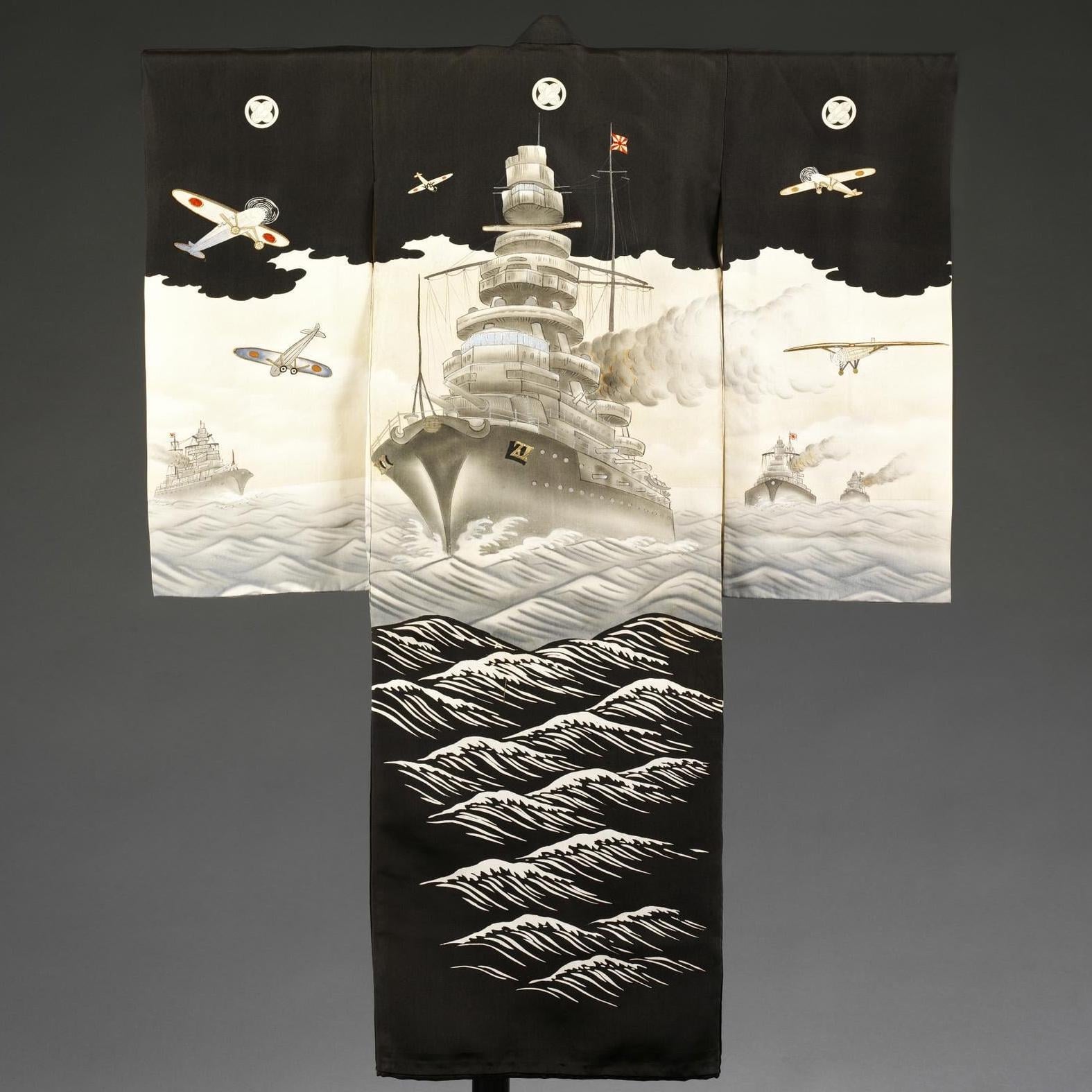
[Museum](https://collections.vam.ac.uk/item/O1294927/kimono-unknown/). A child’s visit first to a Shinto shrine, about 30 days after birth, marked an important rite of passage when parents would thank the gods and a priest would pray for the baby’s health and happiness. Kimono with motifs symbolic of achievement and strength would be worn, or rather draped over, infant boys. In the 1930s, traditional samurai images on such garments were sometimes replaced by contemporary nationalistic ones, symbolically wrapping the young child in wishes for both his own and the nation’s future. The design on this garment served as patriotic propaganda for Japan’s aggressive expansion in East Asia. It features a design of battleships ploughing through the waters with military aircraft overhead. The ships are flying the rising sun flag which remains a symbol of Japan’s imperialist history.

2 Comments
[Museum](https://collections.vam.ac.uk/item/O1294927/kimono-unknown/). A child’s visit first to a Shinto shrine, about 30 days after birth, marked an important rite of passage when parents would thank the gods and a priest would pray for the baby’s health and happiness. Kimono with motifs symbolic of achievement and strength would be worn, or rather draped over, infant boys. In the 1930s, traditional samurai images on such garments were sometimes replaced by contemporary nationalistic ones, symbolically wrapping the young child in wishes for both his own and the nation’s future. The design on this garment served as patriotic propaganda for Japan’s aggressive expansion in East Asia. It features a design of battleships ploughing through the waters with military aircraft overhead. The ships are flying the rising sun flag which remains a symbol of Japan’s imperialist history.
Looks like something from walmart